

Pakistan’s Critical Mineral Resources: Exploration, Value-Addition and Policy
This study on Pakistan’s Critical Mineral Resources examines the exploration and mining prospects of selected metallic critical minerals for Pakistan.
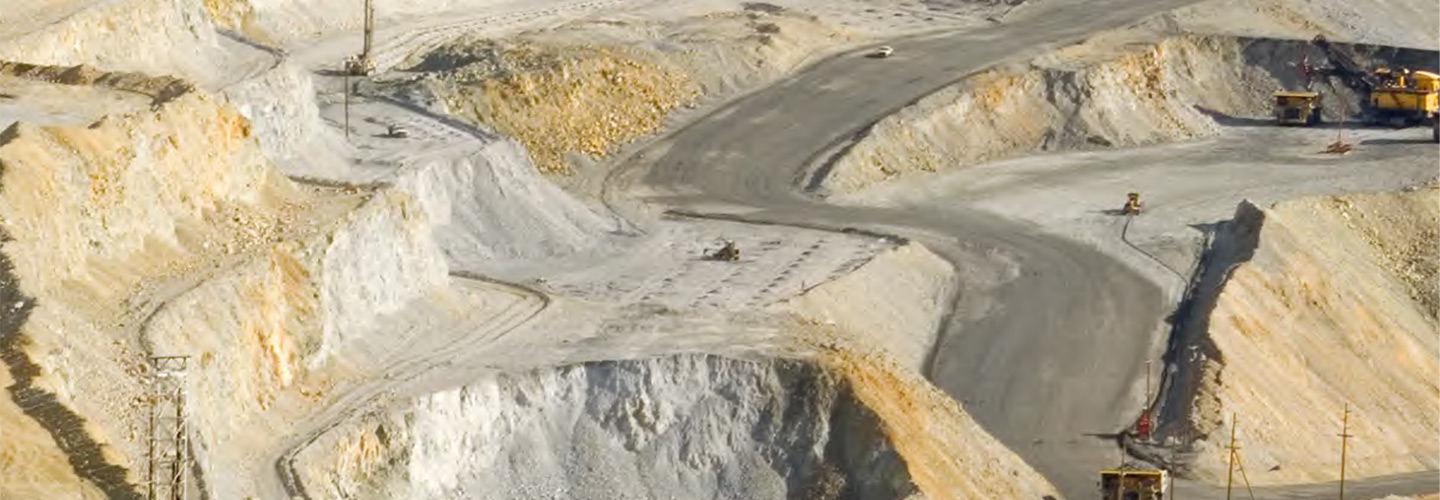
This study on Pakistan’s Critical Mineral Resources examines the exploration and mining prospects of selected metallic critical minerals for Pakistan. These minerals hold the highest geological potential for Pakistan starting with copper, antimony, lead-zinc, rare earth elements and tungsten. The study outlines the demand, supply and price outlooks for these minerals, the financial and logistical challenges in value-addition, the policies that should be implemented to avoid the resource curse and how domestic exploration can be encouraged.
Critical minerals are not a universally defined set of minerals, but rather the nomenclature changes based on each country’s assessment of supply chain risks, economic importance and security needs. All three aspects have recently gained global attention due to rising geopolitical tensions, heightened trade controls, increased militarization and the general twin transition towards green and digital technologies.
Mineral endowments are also by nature unevenly distributed and cannot be shifted or altered. This has created a race for securing long-term supplies and contracts which can only be guaranteed by countries either mining their own deposits or taking ownership in foreign mining projects.
Pakistan’s mineral wealth has been estimated in trillions, it however, has never actually been quantified in size or in terms of economic feasibility for mining when measured using internationally accredited standards like NI 43-101 or JORC. The revival of the Reko Diq project and the growing importance of minerals like copper, has prompted domestic exploration primarily in the Chagai district by state-owned enterprises and private sector consortiums. The major objective currently appears to be reaching the Mineral Resource Estimate (MRE) which is the first indicator of a deposit’s true potential.
If Pakistan is to transform itself into a mining-centric economy it important that exploration by domestic junior mining companies be encouraged and facilitated as they form the pipeline for all future mining projects to come. At the same time negotiations for already proven reserves with senior mining companies have to be balanced in a way such that it creates a mining ecosystem that is self-sustaining in the long-run.
| Mineral | Global Demand | Global Supply | Pakistan’s Prospects |
|---|---|---|---|
| Copper | Growing
· Green energy technologies (solar, EVs, battery energy storage systems) · Data centres, construction and appliances |
Tight
· Declining ore grades · High costs for expansion and greenfield projects. · Tariff uncertainty by the US · Sulfuric acid shortages for leaching |
Reserves: 15 million metric tonnes (Reko Diq)
Ore grades: Averaging 0.4% for Reko Diq, Siah Diq and Saindak
Prospective zones: Balochistan: Chagai KPK: North Waziristan, Chitral |
| Antimony | Stable
· Lead-acid batteries (decreasing due to increased EV consumption) · Increasing usage of antimony compounds in flame retardants and solar panels. |
Tight
· Only 17 countries produce significant quantities. · China and Russia hold more than half of the reserves. · Export-control measures by China to the US. |
Reserves: 26,000 metric tonnes
Ore grades: 10-35% (higher compared to the global average 1-5%)
Prospective zones: Balochistan: Qilla Abdullah, Zhob, Pishin, Washuk KPK: Chitral |
| Zinc | Cyclical
· Strongly tied to China’s real-estate and industrial growth. · Galvanised steel makes up majority of the demand for its corrosion resistant properties.
|
Cyclical
· Highly dependant on smelter efficiency and availability of concentrates. · Zinc mining has become increasingly profitable due to the record prices of by-products like silver and gold. |
Zinc is currently being mined at Duddar. The Baryte-Lead-Zinc (BLZ) project has finished feasibility in the same belt
Reserves: 69 million metric tonnes (BLZ) Ore grades: 8% (Duddar)
Prospective zones: Balochistan: Lasbela and Khuzdar KPK: Chitral and Hazara |
| Rare Earth Elements | Growing
· Permanent magnets are used in clean energy technologies and defence applications. · IEA estimates a 19,000 metric tonne shortage of magnet REEs by 2030. |
Very Tight
· China mined almost 60% of magnet REEs and refined 83%. · Export-control measures by China on rare earth extraction and separation technologies.
|
No proven reserves. Exploration is challenged by the terrain, presence of heavy minerals and radioactive elements.
Prospective zones: KPK: Khyber, Malakand, Swabi, Swat, Chitral Balochistan: Chagai and Raskoh arcs |
| Tungsten | Growing
· Imperative in electronics, aerospace and defence sectors · Expanded due to conflicts in Iran and Ukraine |
Very Tight
· China mined almost 80% of the output in 2025 and has placed export restrictions. · The US banned export of tungsten scrap in 2026.
|
No proven reserves to support commercial mining. Current mining remains artisanal targeting high grade outcrops.
Prospective zones: KPK: Mansehra and Chitral |
The PBC is a private sector not-for-profit advocacy platform set-up in 2005 by 14 (now 100+) of Pakistan’s largest businesses. PBC’s research-based advocacy supports measures which improve Pakistani industry’s regional and global competitiveness. More information about the PBC, its members, objectives and activities can be found on its website: www.pbc.org.pk
DownloadTelephone: 021-35630528-29
Fax: 021-35630530
