

Search the Pakistan Business Council Website

Research Studies
Total Number of Studies: 415
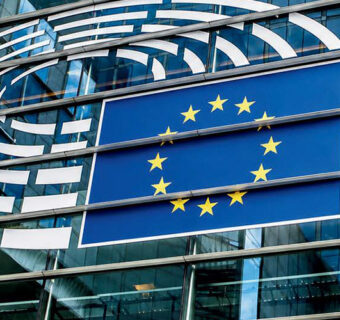
This report, titled “Pakistan’s Trade with the European Union (EU) and Its Member States,” is a part of the Pakistan Business Council’s (PBC) Market Access Series 2025-26. The report provides a comprehensive analysis of Pakistan’s trade performance with the EU, both as a bloc and with individual member countries.
Read More
The report titled “The India – UK FTA: Implications for Pakistan” is part of the Market Access Series 2025-26 published by the...
Read More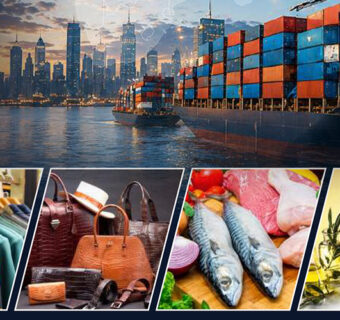
This study, Identifying Potential Opportunities for Enhancing Pakistan’s Export Growth and Diversification, provides a comprehensive assessment of Pakistan’s export structure, competitiveness, and diversification prospects across major international markets.
Read More
The report titled “Woven In or Locked Out? The Future of Pakistan Textiles Exports Under the EU's New Standards” looks at how the European Union is in the process of changing its textile market rules.
Read More

This report maps Pakistan’s fintech ecosystem as of 2026, its infrastructure, its principal segments, and the gap between explosive transaction...
Read More
This study, “Unlocking the Potential of Pakistan’s Other Business Services Exports: Accounting, Auditing, Bookkeeping and Tax Consulting Services”, is a...
Read More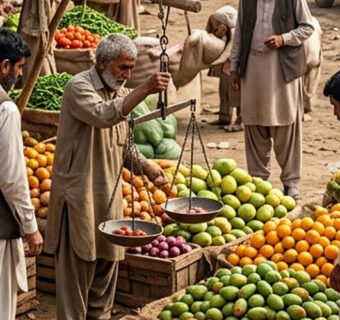
This policy brief explores the structure and functioning of Pakistan’s agricultural marketing system, the role of mandis and intermediaries in shaping market outcomes, the structural constraints limiting transparency and efficiency, and the reforms needed to gradually integrate modern storage, finance, and market infrastructure into the existing system to improve farmer incomes and market resilience.
Read More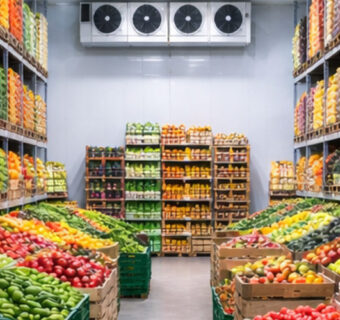
The brief examines the current state of Pakistan’s cold chain infrastructure and highlights how inadequate cold storage, refrigerated transport, and value chain integration contribute to high post-harvest losses, reduced farmer incomes, food waste, and missed export opportunities.
Read More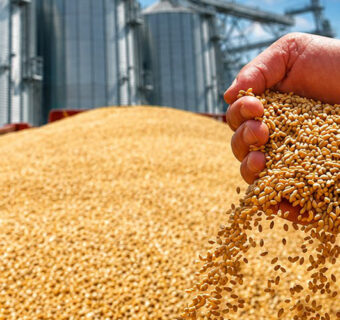
This policy brief explores the structural weaknesses in Pakistan’s grain storage and warehousing system that result in over $1.3 billion in annual post-harvest losses, market instability, and reduced farmer incomes despite adequate crop production.
Read More
This policy brief explores the current state of agricultural mechanization in Pakistan, the structural and institutional challenges limiting its effectiveness, and the reforms needed to build a more efficient, reliable, and inclusive mechanization services ecosystem that can improve productivity, reduce losses, and strengthen farmer incomes.
Read More
This study examines whether a Free Trade Agreement with the Eurasian Economic Union (EAEU) - comprising Russia, Kazakhstan, Belarus, Armenia and Kyrgyzstan - can help Pakistan diversify its trade portfolio and reduce geo-strategic vulnerabilities exposed by global shocks.
Read More
Pakistan's IT and ITeS sector has seen unprecedented growth over the last few years. The sector has sustained double-digit export growth despite macroeconomic crisis, hyperinflation and the onset of AI-driven disruption to the global IT services industry.
Read More

M. T. Khan Road, Karachi.
Telephone: 021-35630528-29
Fax: 021-35630530