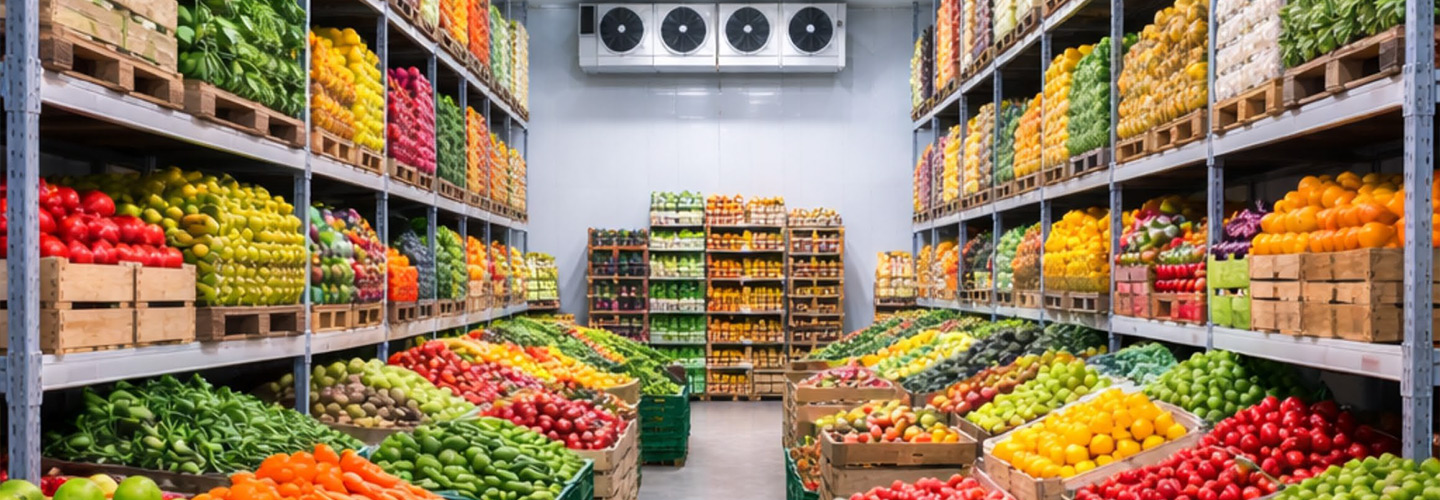
This policy brief titled ‘The Missing Link: Building Pakistan’s Cold Chain’ has been completed by The Pakistan Business Council (PBC) as part of “Grow More/Grow Better” pillar of its “Make-in-Pakistan” thrust. The brief examines the current state of Pakistan’s cold chain infrastructure and highlights how inadequate cold storage, refrigerated transport, and value chain integration contribute to high post-harvest losses, reduced farmer incomes, food waste, and missed export opportunities. It proposes a comprehensive reform agenda centered on targeted infrastructure investment, innovative financing mechanisms, agri-clusters, and private-sector participation to reduce losses, strengthen food security, and enhance agricultural competitiveness.
Cold chain infrastructure is a critical missing link in Pakistan’s agricultural transformation. Agriculture contributes around 24% to GDP and employs 37% of the labour force, while livestock alone accounts for nearly 60% of agricultural GDP. Within this system, horticulture (fruits and vegetables) represents a strategically important but underdeveloped segment, with a market size of approximately USD 15 billion and strong export potential. Despite this scale, Pakistan continues to export low-value, raw commodities due to severe post-harvest inefficiencies and the absence of an integrated cold chain system.
Post-harvest losses (PHL) are the most significant constraint in the horticulture value chain. Estimates suggest that 30–40% of fruits and vegetables are lost annually, equivalent to $700 million to over $1 billion in economic value. Losses are especially severe for mangoes, kinnow, tomatoes, and potatoes, while dairy losses reach 15–20% of total production, amounting to 10–12 billion litres of milk wasted annually. These losses directly reduce farmer incomes, who typically capture only 15–20% of final retail value, and contribute to recurrent market gluts and distress sales. The absence of cold storage is therefore both a food security challenge and a structural driver of rural poverty.
Pakistan’s cold chain infrastructure remains highly underdeveloped. Total cold storage capacity is below 1 million tons against annual fruit and vegetable production of 13–14 million tons, resulting in coverage of less than 8%. Existing infrastructure is uneven and largely commodity-specific: potato-optimized cold rooms dominate, controlled atmosphere (CA) facilities are extremely limited, and farm-gate cold storage is virtually absent. Transport infrastructure is similarly weak, with minimal penetration of refrigerated trucks and heavy reliance on open transport systems that compromise product quality. Dairy cold chain coverage is also fragmented, with only around 5% of milk entering formal, temperature-controlled supply chains.
Three structural constraints explain persistent underinvestment. First, fragmented value chains prevent any single actor from capturing sufficient returns to justify cold chain investment. Second, cyclical price volatility discourages storage investment, as actors sell during high-price periods and avoid storage despite its long-term benefits. Third, investment patterns are geographically concentrated and imitation-driven, leading to clustering in a few commodities (notably potatoes) while high-value crops remain underserved. Policy failures, including ad hoc import responses and weak market coordination, further exacerbate volatility.
International evidence, particularly Morocco’s Plan Maroc Vert, demonstrates that coordinated public investment, aggregation mechanisms, and anchor buyers can successfully trigger private cold chain expansion. Pakistan’s own potato and dairy sectors confirm this dynamic, where integrated processors have enabled the development of functioning storage networks.
The brief proposes a National Cold Chain Development Program anchored by a dedicated financing facility, fiscal incentives, and geographically targeted agri-clusters. Priority interventions include farm-gate solar cold rooms, controlled atmosphere storage expansion, milk chilling coverage targets, and a demonstration CA facility for horticulture. Critically, the strategy emphasizes attracting anchor investors and enabling first-mover projects that can trigger wider private sector participation.
Cold chain investment is among the highest-return opportunities for Pakistan’s agricultural economy, with the potential to significantly reduce losses, stabilize prices, improve farmer incomes, and unlock export diversification.
The PBC is a private sector not-for-profit advocacy platform set-up in 2005 by 14 (now 100) of Pakistan’s largest businesses. PBC’s research-based advocacy supports measures which improve Pakistani industry’s regional and global competitiveness.
Download